Blended Learning
Introduction:
Components of Blended Learning:
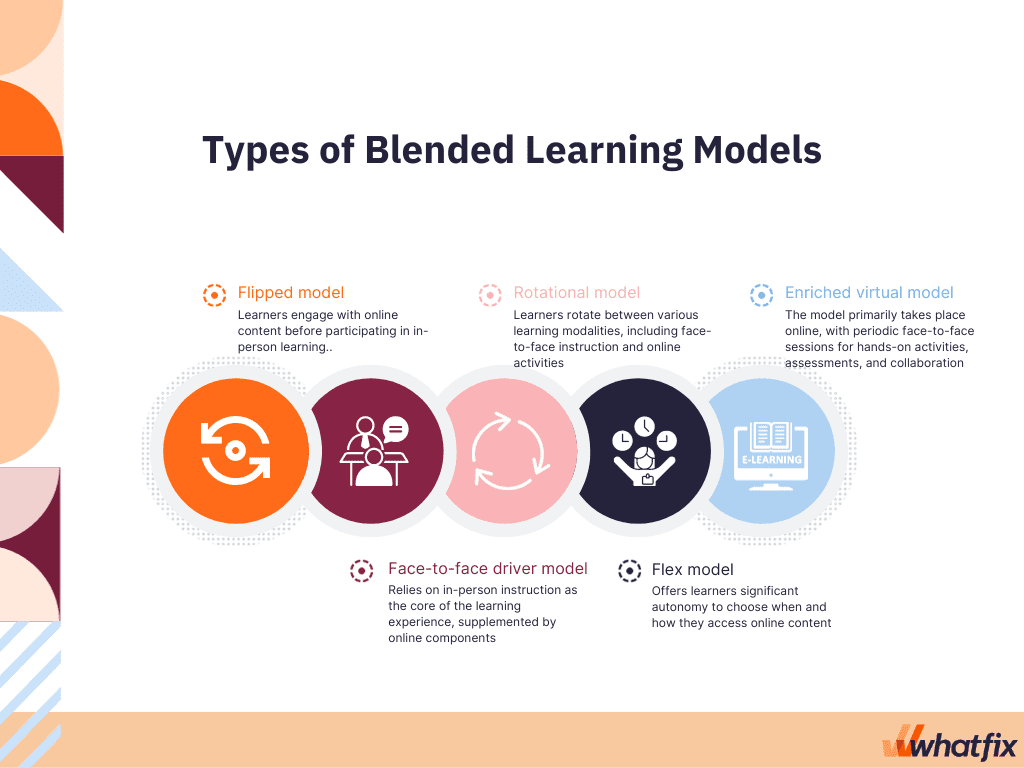
In-Person Instruction:
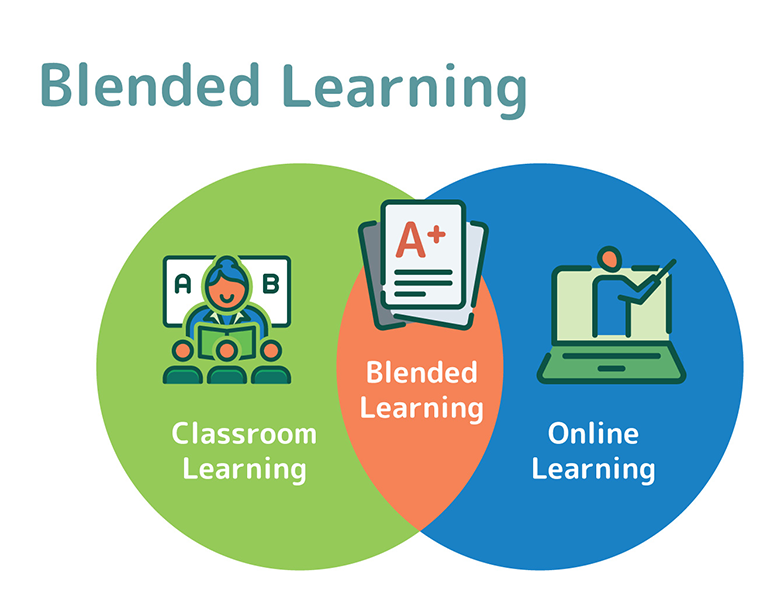
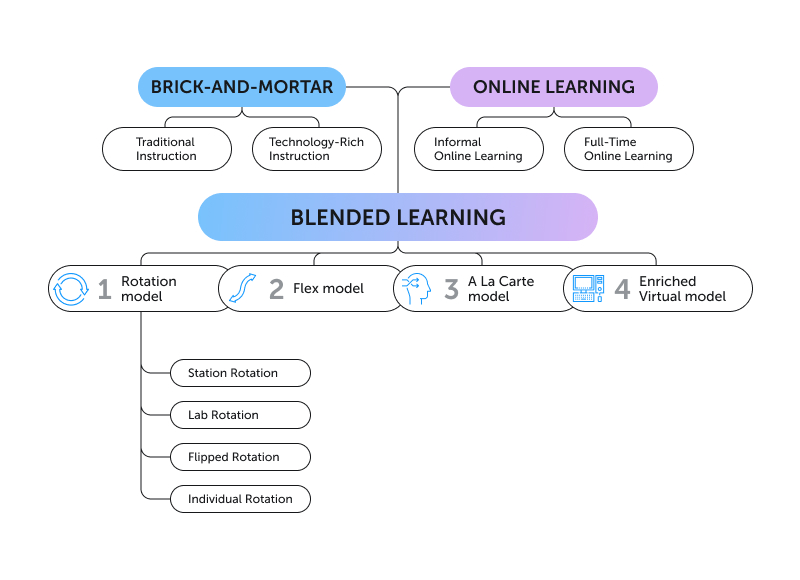
- In a blended learning model, students participate in traditional classroom instruction facilitated by teachers or instructors.
- In-person sessions may include lectures, discussions, hands-on activities, group projects, and other interactive learning experiences.
Online Learning:
- Online learning components supplement in-person instruction through digital platforms and resources.
- Online activities may include multimedia lectures, interactive simulations, self-paced modules, discussion forums, quizzes, and assignments.
Flexible Learning Paths:
- Blended learning offers flexibility in learning paths, allowing students to customize their learning experience based on their needs, preferences, and learning styles.
- Students can access online resources at their own pace, review materials as needed, and engage in additional practice or enrichment activities.
Benefits of Blended Learning:
Enhanced Flexibility:
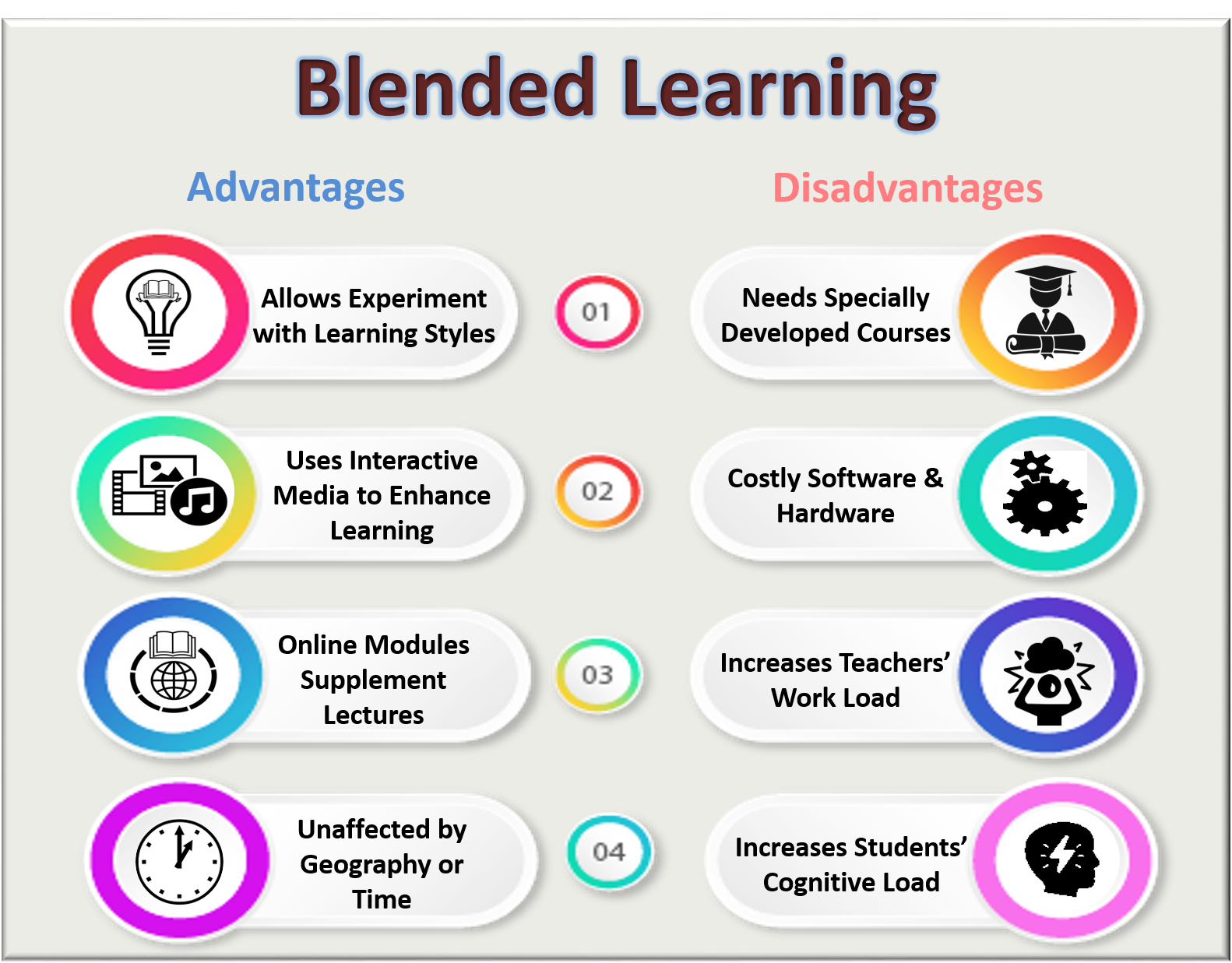
- Blended learning provides flexibility in terms of time, location, and pace of learning. Students can access course materials and participate in activities anytime, anywhere, using digital devices.
Personalized Learning:
- Blended learning facilitates personalized learning experiences tailored to individual student needs and preferences.
- Students can receive personalized feedback, access additional resources, and engage in activities that match their learning styles and proficiency levels.
Improved Engagement:
- Blended learning engages students through a variety of instructional methods and multimedia resources.
- Interactive online activities, collaborative projects, and multimedia content capture students' interest and motivation, leading to increased engagement and participation.
Effective Use of Resources:
- Blended learning optimizes the use of educational resources by leveraging digital tools and online platforms.
- It reduces the need for physical classroom space, textbooks, and printed materials, while providing access to a wealth of online resources and multimedia content.
Support for Differentiated Instruction:
- Blended learning supports differentiated instruction by accommodating diverse learning needs and abilities.
- Teachers can provide targeted interventions, remediation, or enrichment activities based on student performance data collected from online assessments and activities.
Implementation Strategies:
Curriculum Design:
- Effective blended learning begins with thoughtful curriculum design that integrates in-person and online learning activities seamlessly.
- Curriculum designers identify learning objectives, select appropriate instructional strategies, and design engaging online activities that complement face-to-face instruction.

- Technology plays a critical role in blended learning, providing the infrastructure and tools needed for online learning activities.
- Schools and institutions invest in learning management systems (LMS), multimedia resources, collaboration tools, and other digital platforms to support blended learning initiatives.
Professional Development:
- Teachers and instructors receive professional development and training to effectively implement blended learning strategies.
- Professional development programs focus on pedagogical approaches, technology integration, assessment strategies, and best practices for blended learning instruction.

- Schools and institutions provide comprehensive support services to help students succeed in a blended learning environment.
- Student support services may include technical support for online platforms, academic advising, tutoring, counseling, and accessibility accommodations.
Challenges and Considerations:
Access and Equity:
- Access to technology and reliable internet connectivity may pose challenges for students from underserved or marginalized communities.
- Schools and institutions must address issues of digital equity and ensure that all students have access to the necessary technology and resources for blended learning.
Digital Literacy:
- Students and teachers need to develop digital literacy skills to effectively navigate online learning platforms, tools, and resources.
- Schools may provide training and support to help students and teachers build digital literacy competencies.

Maintaining Engagement:
- Maintaining student engagement in online learning environments requires careful planning and design of interactive and engaging activities.
- Teachers may incorporate multimedia content, gamification elements, and collaborative projects to keep students motivated and engaged.
- Assessment strategies in blended learning must be designed to effectively measure student learning and provide meaningful feedback.
- Teachers may use a combination of online quizzes, assignments, discussions, and traditional assessments to assess student progress and understanding.
Conclusion:
In conclusion, blended learning offers a flexible, personalized, and engaging approach to education that combines the best of traditional and online learning environments. By integrating face-to-face instruction with digital resources and activities, blended learning empowers students to take control of their learning journey, adapt to their individual needs, and achieve success in the digital age. As schools and institutions continue to embrace blended learning, thoughtful curriculum design, effective technology integration, and comprehensive support services will be essential for ensuring equitable access, promoting student engagement, and fostering meaningful learning experiences.
Comments
Post a Comment